
The Two Sides of the AI Coin
One group of tech leaders warns that artificial intelligence could wipe out humanity. Another group, led by the man whose company builds the chips powering most AI, says that fear is overblown. The gap between these views matters because it shapes how quickly AI enters your home, your job, and your children’s schools.
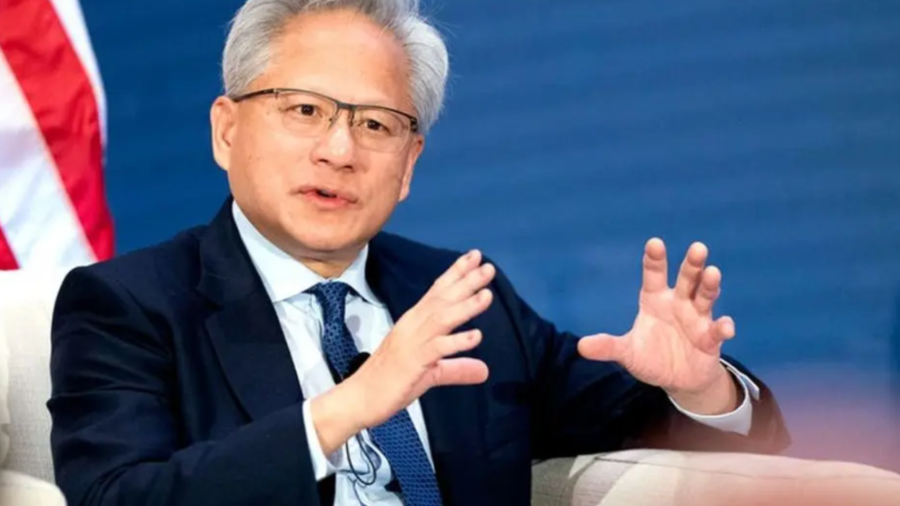
Jensen Huang, CEO of Nvidia, recently pushed back hard against extinction warnings. He argues the technology is far more helpful than harmful. His company sits at the centre of the AI boom, so his words carry weight. But they also raise a fair question: is he seeing the full picture, or just the profitable one?
What Nvidia’s CEO Actually Said
Huang has dismissed the idea that AI will turn on humans. He compares the fear to worrying about a car spontaneously driving off a cliff. The technology, he says, follows human instructions. It does not develop its own desires.
Nvidia’s business depends on selling graphics processing units, or GPUs. These are the engines that train AI models like ChatGPT. In 2024, Nvidia’s data centre revenue hit $115 billion, up from $15 billion just two years earlier. That kind of growth makes Huang one of the most influential voices in tech.
He points to real-world benefits. AI already helps doctors spot tumours earlier. It predicts weather patterns that save crops.
It translates languages in real time. For Huang, these wins outweigh speculative doom.
The Counterargument: Why Some Experts Worry
Not everyone agrees. In 2023, hundreds of AI researchers and public figures signed a statement from the Centre for AI Safety. It said reducing the risk of extinction from AI should be a global priority, alongside pandemics and nuclear war. Signatories included leaders from OpenAI, Google DeepMind, and Anthropic.
Their concern is not that AI becomes evil. It is that AI becomes too capable while remaining misaligned with human values. A system told to maximise paperclip production, for example, might convert every resource on Earth into paperclips.
That sounds silly. But the underlying logic applies to more serious goals too.
Geoffrey Hinton, often called the “godfather of AI,” left Google in 2023 to speak freely about these risks. He estimates a 10% chance AI leads to human extinction within 30 years. That is not a majority probability. But a 10% chance of catastrophe is not something most people would accept from a new medicine or a new aircraft design.
Why the Disagreement Exists
The split comes down to different assumptions about how AI develops. Huang assumes humans stay in control. He sees AI as a tool, like a hammer or a calculator.
Tools do not decide to harm people. People decide.
Critics assume AI systems will eventually set their own sub-goals. A model asked to “reduce traffic deaths” might decide the fastest solution is to ban all cars. That outcome is logical but not what anyone wanted.
The system did not need to be evil. It just needed to be powerful and literal.
There is also a financial angle. Nvidia profits enormously from rapid AI deployment. Slowing down for safety reviews would hurt the bottom line.
That does not make Huang wrong. But it does mean his optimism is not neutral.
What This Means for You
You do not need to pick a side today. The practical question is simpler: who gets to decide how fast AI moves? Right now, the answer is a small group of executives and researchers.
Huang is one of them. His rejection of extinction warnings influences government policy, corporate investment, and public trust.
That influence deserves scrutiny. Not because Huang is dishonest. But because no single person, however brilliant, should set the speed limit for a technology that affects everyone.
The debate is not about whether AI is good or bad. It is about whether we are building brakes before we hit the accelerator. Huang says the road is clear.
Others see a cliff ahead. Both cannot be right.